

After a year of intensive work, the thematic areas of a transformation strategy for automotive suppliers have been identified. The strategy paper of the project group from TRAIBER.NRW outlines fields of action and development perspectives for the Bergische Region as an automotive location. It is about supporting automotive suppliers who have to assert themselves under the existing transformation pressure.
The TRAIBER.NRW project is a cooperative project of the University of Wuppertal, Heinrich Heine University Düsseldorf, Bochum University of Applied Sciences, GLW Velbert, and automotiveland.nrw. In addition, the project is significantly accompanied by social partners. TRAIBER stands for Transformation of the Automotive Industry in the Bergische Region. The goal is to maintain the competitiveness of the suppliers and thus of the location, as well as to secure jobs.
The key points of the transformation strategy were determined as part of two strategy workshops with representatives from regional and municipal economic development agencies, municipalities, education providers, employment agencies, chambers of industry and commerce, other social partners, and companies. This made the group of contributors very broad.
Version 1.0 describes six thematic and action areas:
-
The shortage of skilled workers in the Bergische Region poses a major challenge for automotive suppliers. This lack of labor can only be addressed together.
-
In addition, skilled workers must be prepared for current technological developments. Employees in the automotive supplier industry in the Bergische Region must be provided with tailored qualification opportunities.
-
An attractive location contributes to skilled workers staying loyal to the region. The first version of the strategy paper notes how important joint work on the location quality of the Bergische Region is.
-
It is also important that automotive suppliers in the Bergische Region are supported in opening up new markets and international partnerships.
-
Access to relevant knowledge must be ensured for automotive suppliers so that they can actively shape their company-specific transformation and generate innovations. First idea: a targeted, cross-industry exchange of knowledge.
-
Regional actors must pool their strengths and competencies. They should be supported in networking and cooperation.
“It is important to now bring the impulses from TRAIBER into implementation on site,” said Stephan A. Vogelskamp, Managing Director of automotiveland.nrw and the Bergische Structural and Economic Development Agency.
Initial measures have already been defined to support automotive suppliers in the transformation process and are to be initiated during the project period. The goal is to refine the strategy with two reviews by mid-2025. In this process, company-specific needs will be further specified and corresponding measures derived and developed. The focus is particularly on tackling measures at the regional level in order to initiate practical on-site approaches that secure the future of the companies.
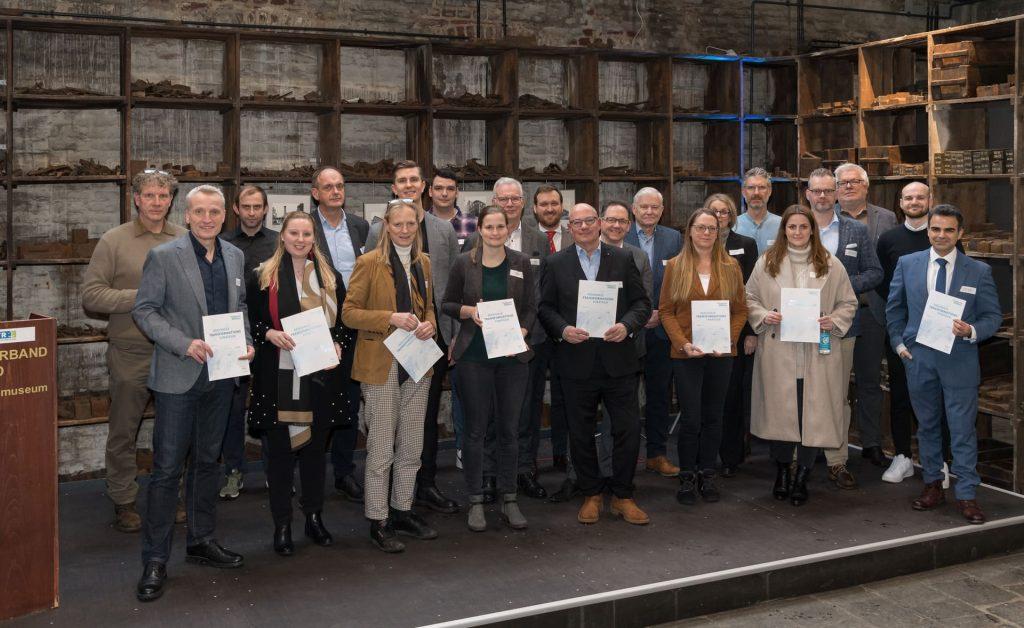
“Don’t wait for the big transformation plan, but look for enthusiastic partners on site and boldly try things out on a small scale,” was the recommendation from Prof. Birgitta Wolff, Rector of the University of Wuppertal, on the occasion of the presentation of Paper 1.0.
The Federal Ministry for Economic Affairs and Climate Action is funding TRAIBER.NRW with €4.1 million as part of the funding call “Transformation Strategies for Regions in the Vehicle and Supplier Industry.” The Bergische Region includes the cities of Remscheid, Solingen, Wuppertal, and Düsseldorf as well as the districts of Mettmann, Rhein-Kreis Neuss, Ennepe-Ruhr-Kreis, and Oberbergischer Kreis.
More information about the project and the strategy document: www.traiber.nrw